-
129, Block-A Bangur Avenue, Mousumi Appartment, Kolkata 700055

129, Block-A Bangur Avenue, Mousumi Appartment, Kolkata 700055
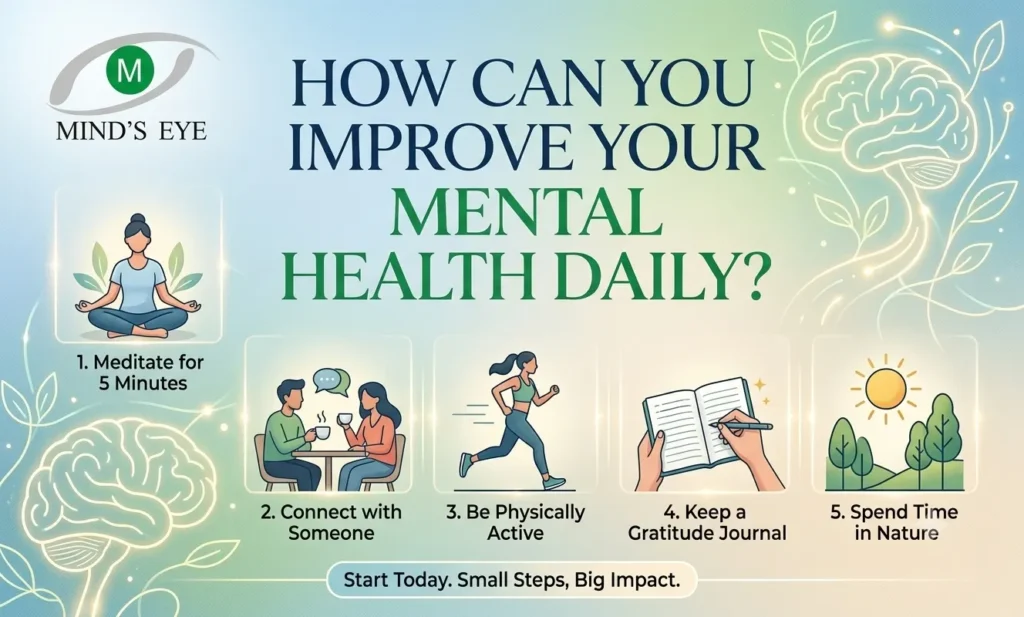
Daily habits can play an important role in supporting mental health and wellbeing.How can I boost my mental health every day? Consistent sleep, physical activity, meaningful connections, mindful breaks, healthy routines, and professional support when needed can strengthen emotional resilience. Small, realistic changes are often easier to maintain than major lifestyle changes and can support long-term psychological wellbeing.
Mental health and wellbeing can be supported through practical daily habits, healthy routines, meaningful relationships, and timely professional support.
Your mental health can change with stress, sleep, relationships, work demands, physical health, and life circumstances. Building manageable habits can help you cope with everyday challenges and recognise when additional support may be useful.
Simple daily habits can support emotional wellbeing and resilience.
These habits are not a replacement for professional mental-health treatment, particularly when symptoms are severe or interfere significantly with everyday life.
1. Prioritise Consistent Sleep
Sleep and mental wellbeing are closely connected. Irregular or insufficient sleep can make it harder to manage emotions, concentrate, and cope with stress.
Try to:
If persistent sleep problems affect your daily functioning, discuss them with an appropriate healthcare professional.
2. Stay Physically Active
Regular physical activity can support mood, stress management, energy, and general health.
You do not necessarily need an intensive workout. Depending on your health and ability, consider:
Begin with manageable activity levels and gradually increase the intensity over time.
3. Practise Mindfulness
Mindfulness involves paying attention to the present moment without automatically reacting to every thought or feeling.
A simple practice may involve sitting quietly for a few minutes, noticing your breathing, and gently returning your attention whenever your mind wanders.
Mindfulness should be viewed as one coping strategy rather than a universal treatment for mental-health conditions.
4. Build Supportive Connections
Positive relationships can provide emotional support and reduce feelings of isolation.
Make time to:
You do not need to discuss every problem with everyone. Choose people with whom you feel safe and respected.
5. Create Manageable Goals
Large responsibilities can feel overwhelming when approached simultaneously.
Break them into smaller tasks:
Large goal → Smaller task → Daily action → Progress
For example, instead of deciding to completely reorganise your life, choose one practical priority for the day.
Achievable goals can provide structure while reducing unnecessary pressure.
Stress is a natural reaction to difficult or demanding situations.. Short-term stress can sometimes help people respond to demands, but persistent or overwhelming stress may affect sleep, concentration, mood, relationships, and everyday functioning.
Common Signs of Excessive Stress
If these experiences persist or interfere with daily life, professional assessment can help identify appropriate support.
There is no single strategy that works equally well for everyone. A useful approach is to combine practical lifestyle habits with coping strategies suited to your circumstances. Check Patient’s Testimonial: https://mindseye.in/testimonials/
A Simple Stress-Management Routine
| Strategy | Example | Potential Benefit |
| Sleep routine | Consistent bedtime | Supports recovery |
| Physical activity | Daily walk | Supports mood and fitness |
| Breathing | Slow breathing for a few minutes | Encourages relaxation |
| Social connection | Talk to someone trusted | Reduces isolation |
| Planning | Prioritise key tasks | Creates structure |
| Mindfulness | Brief present-moment practice | Improves awareness |
| Recreation | Enjoy a hobby | Creates positive breaks |
| Professional support | Speak with a therapist | Provides personalised guidance |
Nutrition and hydration are important components of overall health. Regular meals and adequate fluids can support energy and daily functioning.
Rather than focusing on restrictive diets, aim for a balanced eating pattern that includes appropriate amounts of vegetables, fruits, whole grains, protein sources, and healthy fats.
If you have a medical condition or specific nutritional needs, seek advice from an appropriately qualified healthcare professional.
A sustainable routine should be realistic rather than perfect.
Try the 5-Part Daily Framework
Morning:
Wake at a consistent time and identify your key priorities.
Daytime:
Include movement, regular meals, work or study breaks, and social interaction.
Afternoon:
Review your workload and avoid taking on unnecessary demands.
Evening:
Spend time on relaxing or meaningful activities.
Night:
Reduce stimulation and follow a consistent bedtime routine.
Small actions repeated consistently may be easier to maintain than major changes introduced all at once.
Professional support may be appropriate when emotional or psychological difficulties persist, become difficult to manage, or interfere with work, relationships, sleep, or everyday activities.
People seeking a mental health consultation for stress management may discuss concerns such as:
A qualified mental-health professional can assess individual circumstances and discuss suitable support options.
A psychologist can provide a confidential environment where people can discuss thoughts, emotions, behaviour patterns, relationships, and life challenges.
Depending on the individual’s needs, psychological support may involve:
Anyone searching for the best mental health therapist in Kolkata should consider professional qualifications, relevant experience, ethical practice, confidentiality, and whether the therapist’s approach fits their needs.
Choosing a mental-health professional should involve more than relying on online ratings or promotional claims. Check our Youtube Page click the link: https://www.youtube.com/@mindseye2156
Consider These Factors
If you are considering a best Psychological Counsellor in Kolkata, verify professional credentials and select someone whose expertise aligns with your specific concerns.
Mind’s Eye, led by psychologist Dr Rupa Talukder, can be positioned around professional psychological support and mental-health awareness.
A credible mental-health approach should clearly differentiate general wellbeing guidance from professional psychological treatment.. Readers should receive practical information without exaggerated promises or claims that a particular habit can prevent or cure every mental-health condition.
Professional support should be personalised to the individual’s circumstances, symptoms, goals, and needs.
A simple self-check can help you notice changes in your wellbeing.
Ask yourself:
Tracking patterns can help you recognise when additional support may be appropriate.
Self-care is useful, but it is not always sufficient.
If persistent emotional distress, anxiety, low mood, sleep problems, or other concerns interfere with daily functioning, consider speaking with a qualified mental-health professional.
You can book a mental health counseling appointment to discuss your concerns and explore appropriate options rather than trying to manage everything alone.
If you are experiencing an immediate mental-health crisis or believe you may be in danger, seek urgent professional or emergency support in your area.
You can support your mental health by maintaining regular sleep, exercising, eating balanced meals, staying socially connected, practising mindfulness, setting realistic goals, taking breaks, managing stress, and seeking professional support when persistent concerns interfere with daily life.
1. Take a Short Walk
A brief walk can provide movement and a change of environment.
2. Take a Screen Break
Step away from continuous digital stimulation during the day.
3. Contact Someone You Trust
A short conversation can strengthen social connection.
4. Write Down Priorities
Choose a few realistic tasks instead of trying to complete everything.
5. Practise Slow Breathing
Spend a few minutes paying attention to slow, comfortable breathing.
6. Do Something Enjoyable
Make space for hobbies, music, reading, creativity, or another meaningful activity.
Consider what went well and what can reasonably wait until tomorrow.
What Steps Can I Take for Better Mental Health Each Day?
Maintain regular sleep, stay physically active, connect with supportive people, manage daily stress, practise healthy coping strategies, and seek professional help when ongoing concerns affect your life.
Which Daily Habit Best Supports Mental Health?
There is no single best habit for everyone. Consistent sleep, physical activity, social connection, healthy routines, and effective stress management can collectively support mental wellbeing.
Can exercise improve mental health?
Regular physical activity can support mood and general wellbeing. The appropriate type and intensity depend on individual health, fitness, and circumstances.
How can I reduce stress naturally?
Practical approaches include regular movement, adequate sleep, relaxation practices, social connection, realistic planning, enjoyable activities, and reducing avoidable sources of pressure.
When should I see a psychologist?
Consider professional support when emotional difficulties persist, become difficult to manage, or interfere with relationships, work, sleep, or everyday functioning.
Can counseling help with stress management?
Counseling can help people understand stressors, develop coping strategies, recognise unhelpful patterns, and build practical skills for managing emotional challenges.
How do I find the best mental health therapist in Kolkata?
Look for appropriate professional qualifications, relevant experience, ethical practice, confidentiality, and an approach that matches your specific mental-health needs.
Can self-care replace mental-health treatment?
Self-care can support general wellbeing but should not be considered a replacement for professional treatment when a mental-health condition requires assessment or therapy.
How can I book a mental health counseling appointment?
Contact a qualified mental-health professional or clinic, explain the type of support you are seeking, and ask about availability, consultation format, fees, confidentiality, and follow-up.
Improving mental health does not require perfection or dramatic lifestyle changes. Consistent sleep, movement, supportive relationships, mindfulness, realistic goals, and effective stress management can strengthen everyday wellbeing. When difficulties persist or disrupt daily life, professional psychological support can provide personalised guidance. With informed self-care and appropriate professional help, people can develop healthier coping strategies and build greater emotional resilience. Check our Address: https://maps.app.goo.gl/qRaX2tGXrx8Co6sK6

27.08.2026