-
129, Block-A Bangur Avenue, Mousumi Appartment, Kolkata 700055

129, Block-A Bangur Avenue, Mousumi Appartment, Kolkata 700055
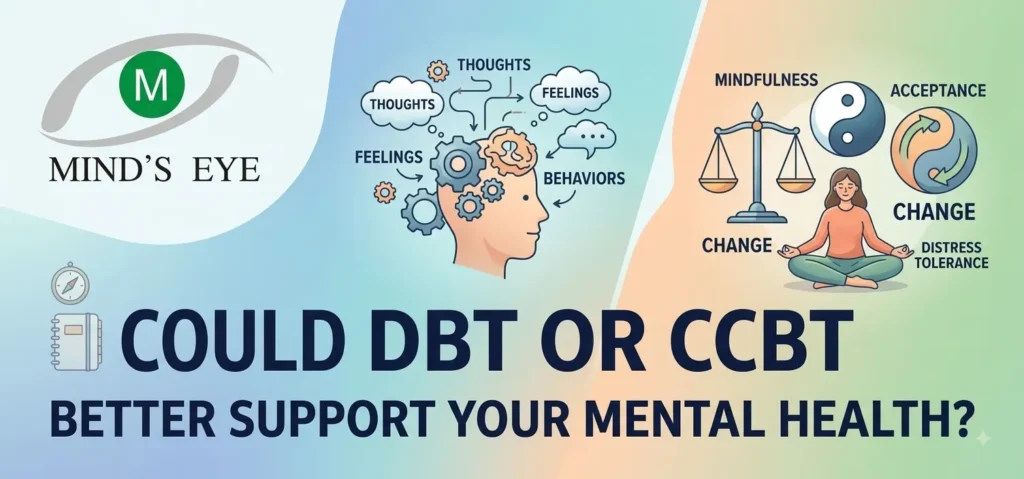
Choosing the right therapy depends on your concerns, goals, and individual needs. What is the difference between DBT and CBT? CBT often focuses on changing unhelpful thoughts and behaviors, while DBT adds skills for emotional regulation, distress tolerance, mindfulness, and interpersonal effectiveness. Understanding these approaches can help you discuss suitable options with a qualified mental-health professional.
Dialectical Behavior Therapy for Mental Health is a structured form of psychotherapy that combines cognitive-behavioral principles with acceptance and mindfulness-based strategies. It was developed by psychologist Marsha M. Linehan and is commonly associated with skills training for emotional regulation, distress tolerance, interpersonal effectiveness, and mindfulness.
DBT can be particularly useful when someone experiences intense emotions, difficulty managing distress, impulsive responses, or challenging interpersonal patterns. A qualified psychologist can determine whether DBT is appropriate for an individual’s concerns.
DBT commonly teaches four core skill areas:
Cognitive Behavioral Therapy (CBT) is a structured, goal-oriented psychological treatment that explores connections between thoughts, emotions, and behaviors. It can help people identify unhelpful thinking patterns and develop more adaptive responses.
CBT is widely used for concerns including anxiety, stress, depression, phobias, and other psychological difficulties, depending on the individual’s assessment and treatment plan.
CBT therapy for anxiety and stress may involve identifying situations that trigger anxiety, recognizing automatic thoughts, examining thinking patterns, and practicing practical coping strategies.
A therapist may use techniques such as:
The specific techniques depend on the person’s symptoms, goals, and clinical assessment.
What is the difference between DBT and CBT? Both approaches are structured, skills-based therapies, but they emphasize somewhat different therapeutic strategies.
| Feature | CBT | DBT |
|---|---|---|
| Main emphasis | Thoughts, emotions, and behaviors | Emotional regulation, acceptance, and behavior change |
| Key skills | Cognitive restructuring and coping strategies | Mindfulness, distress tolerance, emotion regulation, interpersonal effectiveness |
| Approach | Identifying and changing unhelpful patterns | Balancing acceptance with purposeful change |
| Common applications | Anxiety, stress, depression, phobias and other concerns | Emotional dysregulation and certain complex behavioral or interpersonal difficulties |
| Structure | Often structured and goal-oriented | Structured, skills-focused, and often more comprehensive |
| Therapy choice | Based on individual needs | Based on individual needs and clinical suitability |
Featured snippet:
CBT primarily helps people identify and change unhelpful thoughts and behaviors, while DBT combines cognitive-behavioral techniques with acceptance, mindfulness, distress tolerance, emotion regulation, and interpersonal skills.
Yes. Mindfulness can appear in both approaches, although it may be integrated differently.
Mindfulness based cognitive therapy combines cognitive therapy concepts with mindfulness practices. It is particularly associated with helping individuals become more aware of thoughts and feelings without immediately reacting to them.
DBT also incorporates mindfulness as one of its core skill areas. The emphasis is often on observing and describing experiences while developing greater control over automatic reactions.
Mindfulness-based strategies may help individuals:
A psychologist can explain which mindfulness techniques are suitable for a person’s therapeutic goals.
There is no universally better therapy. CBT vs DBT therapy for anxiety and emotional regulation should be considered according to the person’s symptoms, treatment objectives, history, preferences, and professional assessment.
For anxiety and stress, CBT may be an appropriate evidence-based option for many individuals. DBT may be considered when emotional regulation, distress tolerance, interpersonal difficulties, or other concerns require greater emphasis.
Therapy selection should be individualized rather than based only on the therapy’s name.
You may consider discussing CBT with a qualified professional if you are experiencing persistent:
A professional assessment can help determine whether CBT, DBT, another therapeutic approach, or a combination of strategies is appropriate.
A best Psychological Counsellor in Kolkata should not simply recommend a therapy based on a general symptom. A proper therapeutic decision considers the person’s concerns, goals, history, current functioning, preferences, and clinical needs.
During an initial consultation, a psychologist may explore:
This collaborative process can make therapy more focused and meaningful.
If you decide to schedule CBT counseling appointment, the initial session may involve discussing your concerns, relevant background, current difficulties, treatment goals, and expectations.
Depending on the assessment, the psychologist may explain:
The exact structure varies according to the individual’s needs and the psychologist’s clinical approach.
| Goal or concern | CBT may emphasize | DBT may emphasize |
| Anxiety | Challenging unhelpful thoughts and avoidance | Managing emotional responses and distress |
| Stress | Coping and problem-solving | Distress tolerance and emotional regulation |
| Negative thinking | Cognitive restructuring | Awareness plus acceptance and change |
| Emotional intensity | Cognitive and behavioral strategies | Emotion-regulation skills |
| Relationship difficulties | Communication and behavioral patterns | Interpersonal effectiveness |
| Present-moment awareness | May incorporate mindfulness | Core mindfulness component |
These are broad distinctions, not diagnostic rules. A qualified professional should determine the appropriate therapeutic approach. Check Patient’s review click: https://bit.ly/3TQppAY
At Mind’s Eye, led by psychologist Dr Rupa Talukder, psychological support can be approached through individualized assessment and evidence-informed therapeutic strategies. The focus should remain on understanding each person’s concerns and selecting an appropriate intervention rather than treating every situation with the same method.
Whether someone is exploring CBT, DBT, mindfulness-based approaches, or counseling for anxiety and stress, professional guidance can help clarify realistic therapeutic goals. Check our Youtube Page click: https://www.youtube.com/@mindseye2156
CBT focuses strongly on identifying and changing unhelpful thought and behavior patterns. DBT incorporates cognitive-behavioral strategies while placing additional emphasis on acceptance, mindfulness, distress tolerance, emotional regulation, and interpersonal effectiveness.
CBT is commonly used for anxiety, but the most suitable approach depends on the person’s individual symptoms and treatment goals. DBT may be considered when emotional regulation or distress tolerance is also a significant concern.
Yes. CBT can help people identify unhelpful thinking patterns, develop coping strategies, improve problem-solving, and change behaviors that may contribute to ongoing stress.
No. DBT includes emotional regulation but also teaches mindfulness, distress tolerance, and interpersonal effectiveness skills.
Mindfulness based cognitive therapy combines cognitive therapy principles with mindfulness practices. It helps individuals develop greater awareness of thoughts and feelings while learning to respond to them more skillfully.
You can contact a qualified psychologist or counseling service to discuss your concerns and request an initial assessment. The professional can then determine whether CBT is suitable for your needs.
Yes. After assessing your concerns, goals, and circumstances, a psychologist may recommend DBT, CBT, another evidence-based approach, or an integrated treatment plan when clinically appropriate.
CBT and DBT are structured psychological approaches with overlapping but distinct strengths. CBT often emphasizes changing unhelpful thoughts and behaviors, while DBT combines change strategies with acceptance, mindfulness, distress tolerance, and emotional-regulation skills. Choosing between them should depend on individual concerns and therapeutic goals. Professional assessment from a qualified psychologist can help identify an appropriate, personalized path toward mental-health support. Check Our Physical Address Click the link: https://maps.app.goo.gl/WpmAJCw59jjZRjBe9

27.08.2026