-
129, Block-A Bangur Avenue, Mousumi Appartment, Kolkata 700055

129, Block-A Bangur Avenue, Mousumi Appartment, Kolkata 700055
Anxiety can affect thoughts, emotions, sleep, relationships and everyday functioning. Psychological support can help you understand anxiety triggers, challenge unhelpful thinking and build practical coping skills through evidence-based approaches tailored to your needs. Mental Health and Wellbeing can improve when anxiety is understood and addressed with appropriate psychological care. A structured consultation can help identify persistent worry, avoidance, stress responses and behavioural patterns while developing healthier ways to manage them. At Mind's Eye, led by Psychologist Dr Rupa Talukder, psychological support can focus on the individual's concerns, symptoms, coping abilities and treatment goals rather than using a one-size-fits-all approach. How Can Psychology Help With Anxiety? Psychology can help with anxiety by exploring the connection between thoughts, feelings and behaviours. Evidence-based psychotherapy, particularly cognitive behavioural therapy (CBT), can help people recognise unhelpful thought patterns, develop coping strategies and gradually respond differently to anxiety-provoking situations. What Are the Main Ways Psychology Can Help? Identifying anxiety triggers: Understand situations, thoughts or experiences associated with anxious responses. Recognising unhelpful thinking: Notice patterns such as catastrophising, excessive threat predictions or persistent self-doubt. Developing coping skills: Learn practical strategies for managing worry, stress and emotional reactions. Changing avoidance patterns: Therapy can help people gradually approach situations they have been avoiding when clinically appropriate. Improving emotional regulation: Build healthier ways to respond to difficult emotions. Strengthening problem-solving: Separate solvable problems from repetitive worry and develop practical responses. Supporting healthier routines: Address how anxiety may affect sleep, concentration, relationships and daily activities. Building self-awareness: Understand recurring emotional and behavioural patterns and how they influence wellbeing. What Is Anxiety and When Does It Become a Concern? Feeling anxious occasionally is a normal response to stress or perceived danger. Anxiety becomes more concerning when excessive fear or worry persists, becomes difficult to control or interferes with everyday functioning. The American Psychological Association notes that anxiety disorders can affect work, education, social functioning and relationships. Symptoms can vary considerably and may include: Persistent or excessive worry Restlessness or feeling constantly “on edge” Irritability Difficulty concentrating Sleep difficulties Muscle tension Racing heartbeat Sweating or trembling Avoidance of feared situations Episodes of intense fear or panic These symptoms can have different causes, so professional assessment is important before assuming that anxiety is the only explanation. How Does Psychological Counselling Support Anxiety Management? Psychological counselling provides a structured environment where an individual can discuss concerns without relying on avoidance or suppression. The psychologist can...

Can small relationship rituals strengthen your bond? What relationship rituals can help love grow stronger? Simple, meaningful habits can create emotional security, improve communication, and maintain connection. For couples seeking guidance, Relationship Rituals Counsellors in Kolkata can help develop practical routines. At Mind's Eye, led by Psychologist Dr Rupa Talukder, relationship counselling can support healthier communication and lasting emotional connection. What Are Relationship Rituals? Relationship rituals are intentional, repeated activities that couples share to nurture closeness. They do not need to be expensive, elaborate, or time-consuming. The goal is to create predictable moments of connection that help partners feel valued. Examples include: Having morning coffee together Sharing a daily check-in Planning a weekly date Saying goodbye with affection Celebrating personal achievements Discussing the day before bedtime Expressing gratitude regularly These habits can become emotional anchors during stressful periods. Which Relationship Rituals Can Help Love Grow Stronger? The best rituals for a healthy romantic relationship are realistic, mutually enjoyable, and emotionally meaningful. Couples can choose rituals based on their schedules, personalities, and relationship needs. Relationship RitualHow It HelpsDaily check-inEncourages emotional sharingWeekly dateCreates dedicated couple timeGratitude practiceReinforces appreciationTechnology-free mealImproves focused communicationMonthly relationship reviewIdentifies concerns earlyShared hobbyBuilds companionshipBedtime conversationMaintains emotional connection What Are the Best Rituals for a Healthy Romantic Relationship? 1. Create a Daily Connection Ritual Set aside even 10–15 minutes to ask about each other's day. Instead of immediately discussing chores or responsibilities, ask questions such as: What was the best part of your day? Was anything difficult today? Is there anything you need from me? Consistent conversations can help partners remain emotionally connected. 2. Practise Daily Appreciation A simple “thank you” can have significant emotional value. Notice specific efforts rather than offering only generic compliments. For example, saying, “I appreciate how you handled that difficult situation,” communicates recognition more clearly than simply saying, “You're great.” 3. Schedule Quality Time Busy schedules can gradually reduce a couple time. A weekly date, evening walk, shared meal, or hobby can create intentional opportunities for connection. Quality time is more important than extravagance. The objective is presence and attention, not spending money. 4. Build a Technology-Free Ritual Phones and constant notifications can interrupt conversations. Couples can establish a technology-free dinner or evening period. This creates space for listening, eye contact, conversation, and shared experiences. 5. Celebrate Small Milestones Couples do not need to wait for birthdays or anniversaries to celebrate. Completing a project, overcoming...

Student life can bring academic pressure, examination stress, social challenges and uncertainty about the future. Student Counselling in Kolkata offers a confidential space where students can understand emotions, develop coping skills and build healthier responses to challenges. Psychological counseling for student anxiety may also support emotional wellbeing, self-confidence, concentration and constructive problem-solving when guided by a qualified professional. How can psychological counseling help students? It can provide structured emotional support for concerns such as academic stress, anxiety, low confidence, relationship difficulties and adjustment challenges. Student Counselling in Kolkata can help students understand their experiences and develop practical coping strategies without judgement. For students and parents looking for a Best Psychological Counsellor in Kolkata, selecting a qualified professional and a suitable counselling approach is important. Why Do Students Need Psychological Counselling? Students experience different pressures depending on their age, academic environment, family circumstances and personal expectations. Common concerns may include: Examination and academic stress Performance anxiety Fear of failure Low self-esteem Difficulty concentrating Peer or friendship concerns Family-related stress Social adjustment difficulties Career uncertainty Emotional overwhelm Changes in motivation Difficulty managing expectations Counselling does not mean that a student is weak or incapable. It can provide an opportunity to understand difficulties early and develop healthier ways of responding. What Are the Benefits of Student Counselling? Student concernHow counselling may helpAcademic stressDevelops stress-management and planning strategiesAnxietyBuilds coping skills and emotional awarenessLow confidenceEncourages healthier self-perceptionConcentration difficultiesExplores emotional or behavioural factors affecting focusPeer problemsSupports communication and interpersonal skillsFamily pressureProvides a confidential space to process emotionsCareer uncertaintyHelps students explore concerns and make informed decisionsEmotional distressSupports recognition and management of difficult emotions The goals of counselling vary according to the student's individual needs. How Does Psychological Counseling Help Student Anxiety? Psychological counseling for student anxiety can help students recognise anxious thoughts, understand triggers and practise appropriate coping techniques. A counsellor may use evidence-based psychological approaches according to the student's age, concerns and clinical needs. Check Mind's Eye video click: https://www.youtube.com/watch?v=cUfGtx3R95I Counselling may focus on: Identifying anxiety triggers. Understanding thoughts and emotional responses. Developing healthy coping strategies. Improving communication. Building confidence. Managing academic expectations. Developing relaxation or grounding techniques when appropriate. Encouraging healthy routines and support systems. Persistent or severe anxiety may require a more comprehensive mental-health assessment and appropriate professional intervention. What Happens During Student Counselling? The first session generally focuses on understanding the student's concerns and establishing a comfortable therapeutic relationship. Depending on the situation,...
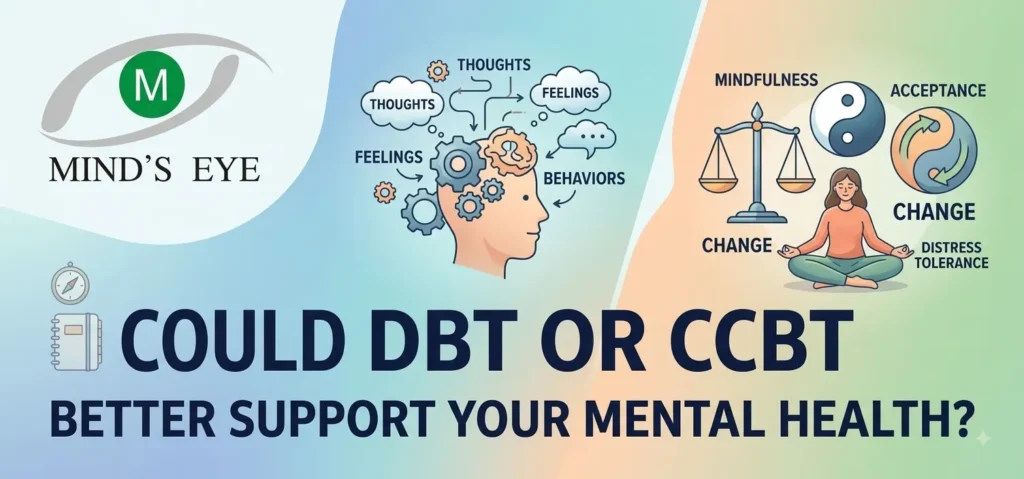
Choosing the right therapy depends on your concerns, goals, and individual needs. What is the difference between DBT and CBT? CBT often focuses on changing unhelpful thoughts and behaviors, while DBT adds skills for emotional regulation, distress tolerance, mindfulness, and interpersonal effectiveness. Understanding these approaches can help you discuss suitable options with a qualified mental-health professional. Dialectical Behavior Therapy for Mental Health is a structured form of psychotherapy that combines cognitive-behavioral principles with acceptance and mindfulness-based strategies. It was developed by psychologist Marsha M. Linehan and is commonly associated with skills training for emotional regulation, distress tolerance, interpersonal effectiveness, and mindfulness. DBT can be particularly useful when someone experiences intense emotions, difficulty managing distress, impulsive responses, or challenging interpersonal patterns. A qualified psychologist can determine whether DBT is appropriate for an individual's concerns. What Skills Does DBT Focus On? DBT commonly teaches four core skill areas: Mindfulness: Paying attention to present experiences without automatically reacting. Distress tolerance: Developing healthier ways to manage difficult situations. Emotion regulation: Understanding and managing intense emotional responses. Interpersonal effectiveness: Communicating needs while maintaining healthier relationships. What Is Cognitive Behavioral Therapy? Cognitive Behavioral Therapy (CBT) is a structured, goal-oriented psychological treatment that explores connections between thoughts, emotions, and behaviors. It can help people identify unhelpful thinking patterns and develop more adaptive responses. CBT is widely used for concerns including anxiety, stress, depression, phobias, and other psychological difficulties, depending on the individual's assessment and treatment plan. How Can CBT Therapy Help With Anxiety and Stress? CBT therapy for anxiety and stress may involve identifying situations that trigger anxiety, recognizing automatic thoughts, examining thinking patterns, and practicing practical coping strategies. A therapist may use techniques such as: Cognitive restructuring Behavioral experiments Problem-solving Exposure-based strategies when clinically appropriate Relaxation and coping techniques Behavioral activation Thought and emotion monitoring The specific techniques depend on the person's symptoms, goals, and clinical assessment. What Is the Difference Between DBT and CBT? What is the difference between DBT and CBT? Both approaches are structured, skills-based therapies, but they emphasize somewhat different therapeutic strategies. FeatureCBTDBTMain emphasisThoughts, emotions, and behaviorsEmotional regulation, acceptance, and behavior changeKey skillsCognitive restructuring and coping strategiesMindfulness, distress tolerance, emotion regulation, interpersonal effectivenessApproachIdentifying and changing unhelpful patternsBalancing acceptance with purposeful changeCommon applicationsAnxiety, stress, depression, phobias and other concernsEmotional dysregulation and certain complex behavioral or interpersonal difficultiesStructureOften structured and goal-orientedStructured, skills-focused, and often more comprehensiveTherapy choiceBased on individual needsBased on individual needs and...
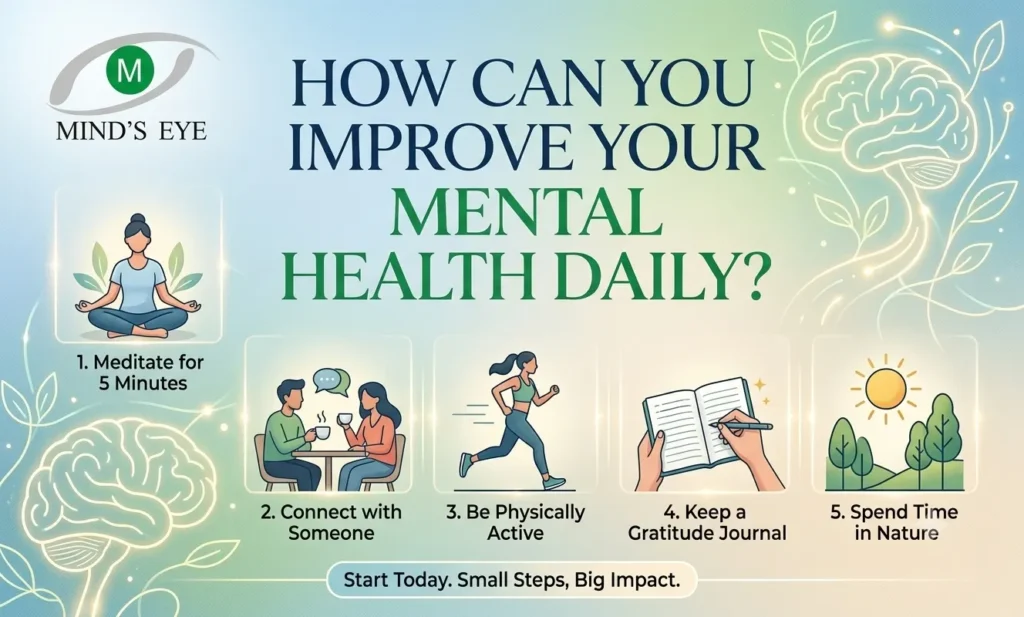
Daily habits can play an important role in supporting mental health and wellbeing.How can I boost my mental health every day? Consistent sleep, physical activity, meaningful connections, mindful breaks, healthy routines, and professional support when needed can strengthen emotional resilience. Small, realistic changes are often easier to maintain than major lifestyle changes and can support long-term psychological wellbeing. Mental health and wellbeing can be supported through practical daily habits, healthy routines, meaningful relationships, and timely professional support. Your mental health can change with stress, sleep, relationships, work demands, physical health, and life circumstances. Building manageable habits can help you cope with everyday challenges and recognise when additional support may be useful. How Can I Boost My Mental Health Every Day? Simple daily habits can support emotional wellbeing and resilience. Daily Habits for Better Mental Wellbeing Maintain a consistent sleep routine. Move your body regularly. Eat balanced, nourishing meals. Take short breaks from screens and work. Spend time with supportive people. Practise mindfulness or slow breathing. Set realistic daily priorities. Make time for enjoyable activities. Limit habits that negatively affect sleep or mood. Ask for professional help when concerns persist. These habits are not a replacement for professional mental-health treatment, particularly when symptoms are severe or interfere significantly with everyday life. What Daily Habits Support Mental Health? 1. Prioritise Consistent Sleep Sleep and mental wellbeing are closely connected. Irregular or insufficient sleep can make it harder to manage emotions, concentrate, and cope with stress. Try to: Maintain regular sleep and wake times. Create a relaxing bedtime routine. Reduce stimulating activities before bed. Keep the bedroom comfortable and quiet. Avoid relying on excessive caffeine to compensate for poor sleep. If persistent sleep problems affect your daily functioning, discuss them with an appropriate healthcare professional. 2. Stay Physically Active Regular physical activity can support mood, stress management, energy, and general health. You do not necessarily need an intensive workout. Depending on your health and ability, consider: Walking Stretching Cycling Swimming Yoga Recreational sports Begin with manageable activity levels and gradually increase the intensity over time. 3. Practise Mindfulness Mindfulness involves paying attention to the present moment without automatically reacting to every thought or feeling. A simple practice may involve sitting quietly for a few minutes, noticing your breathing, and gently returning your attention whenever your mind wanders. Mindfulness should be viewed as one coping strategy rather than a universal treatment for mental-health conditions....
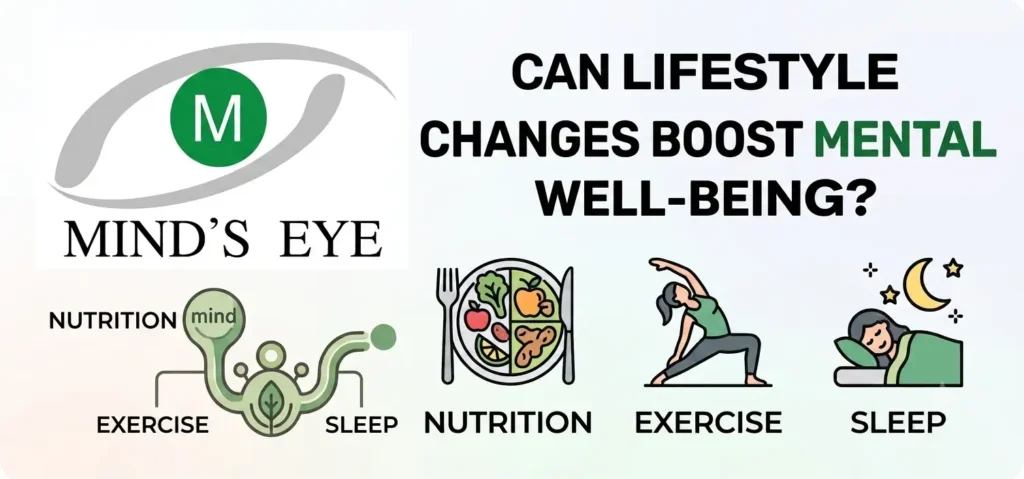
Healthy lifestyle habits play a vital role in improving emotional resilience, reducing stress, and supporting long-term mental wellness. Regular exercise, balanced nutrition, quality sleep, mindfulness, and professional counselling can transform daily life. The best psychological counsellor in Kolkata can guide personalised lifestyle modification for mental health, helping individuals achieve better emotional balance and overall well-being. Mental health wellbeing improves with healthy habits and expert care. The best psychological counsellor in Kolkata explains How Can Lifestyle Changes Improve Mental Health? through practical daily changes. Positive lifestyle changes can greatly enhance mental health and overall well-being. Regular exercise, balanced nutrition, quality sleep, stress management, and meaningful social connections support emotional resilience and reduce anxiety. Seeking professional guidance when needed also enhances long-term mental wellness. Small, consistent habits can make a lasting difference, helping you achieve a healthier, happier, and more balanced life. Lifestyle Modification for Mental Health and Well-Being Mental health is influenced not only by genetics and life experiences but also by everyday lifestyle choices. Simple, consistent habits—such as regular physical activity, nutritious eating, quality sleep, stress management, and meaningful social connections—can significantly improve emotional resilience and psychological well-being. While these habits are beneficial for everyone, personalised guidance from the best psychologist in Kolkata can help individuals develop sustainable routines tailored to their unique challenges. At Mind's Eye, led by Psychologist Dr. Rupa Talukder, evidence-based counselling and behavioural interventions empower individuals to make positive lifestyle modifications that support long-term mental health wellbeing. Lifestyle Changes That Support Mental Health Wellbeing Lifestyle HabitMental Health BenefitRegular ExerciseReduces stress and improves moodBalanced DietSupports brain function and emotional stabilityQuality SleepEnhances emotional regulation and concentrationMindfulness PracticeReduces anxiety and improves self-awarenessSocial ConnectionsBuilds emotional support and resilienceTime ManagementLowers stress and prevents burnoutProfessional CounsellingProvides coping strategies and emotional guidanceLimiting Screen TimeImproves sleep and reduces mental fatigue Why Lifestyle Modification Matters for Mental Health Wellbeing? Mental wellness is built through everyday choices. Lifestyle modification for mental health focuses on creating healthy routines that improve emotional balance, reduce psychological distress, and strengthen resilience. Benefits include: Better emotional regulation Reduced anxiety and stress Improved self-confidence Enhanced concentration Better sleep quality Increased productivity Stronger coping skills Improved relationships How Can Lifestyle Changes Improve Mental Health? Healthy lifestyle changes positively influence brain chemistry, hormone balance, and emotional resilience. Physical Activity Supports Emotional Health Exercise stimulates endorphins and promotes feelings of well-being. Benefits include: Reduced anxiety Improved mood Better sleep Increased energy Lower stress hormones Even...